
 +86 13713990149
 sales@huceen.com
Huceen H7-300 PLC Helps with Automation in Heavy Industry
 2026-03-27
 Huceen
In the field of industrial automation, control systems represented by the S7-300 once formed the cornerstone of the industry, especially in heavy industries such as metallurgy, chemical engineering, and cement, where the S7-300 system was a crucial control core. However, with the strategic adjustment of this product series, it is now gradually entering the end of its product life cycle and faces imminent withdrawal from the market.
At the same time, the aging of existing systems, cost pressures, and supply chain risks are becoming increasingly prominent, plunging many enterprises into a dilemma of "difficult to upgrade, expensive to replace, and troublesome to maintain".
Huceen continues to improve this classic product
Based on a deep understanding of the S7-300 system and over a decade of technological accumulation, Huceen offers a reliable and smooth solution for businesses facing system upgrades, providing superior cost-effectiveness, stronger environmental adaptability, and more comprehensive after-sales support.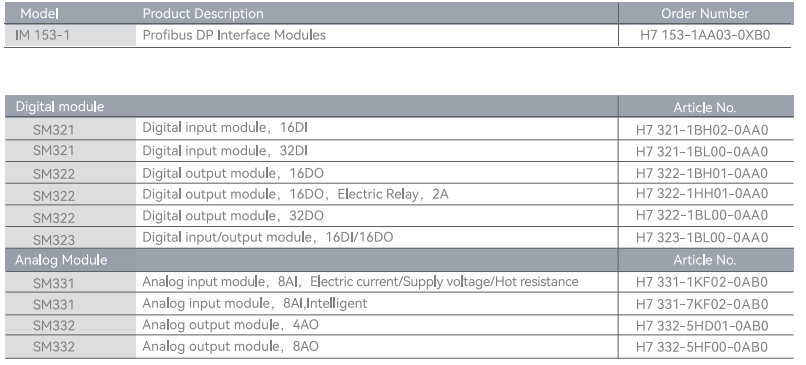 Huceen H7-300 series PLC products cover digital input and output modules, analog input and output modules, temperature measurement modules, and communication interface modules.
Ultimate compatibility, seamless replacement
The external dimensions, module installation method and wiring rules are completely consistent with the S7-300, and there is no need to modify the cabinet or rewire.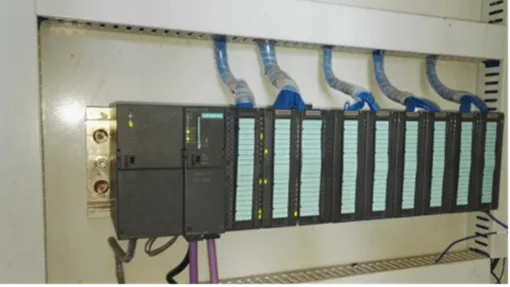
Supports STEP7 and TIA Portal platforms; existing programs can be directly ported.
Supports the mixed use of S7-300 and Huceen H7-300 modules in the same system.
Superior performance
Its anti-interference capability, isolation capability, and electrical performance all meet the S7-300 standard, ensuring control accuracy and stability.
It provides comprehensive diagnostic functions for power failure, short circuit, and open circuit, significantly improving fault location efficiency.
Three-proof reinforcement
Addressing the challenges of high temperatures, dust, and corrosion in metallurgical and chemical industries, the entire H7-300 product line employs a three-proof process, providing: Moisture resistance( adaptable to environments with humidity levels below 95%); Corrosion resistance(resistant to hydrogen sulfide and chloride ion corrosion); Oil resistance(the surface coating resists oil adhesion, ensuring long-term stable operation)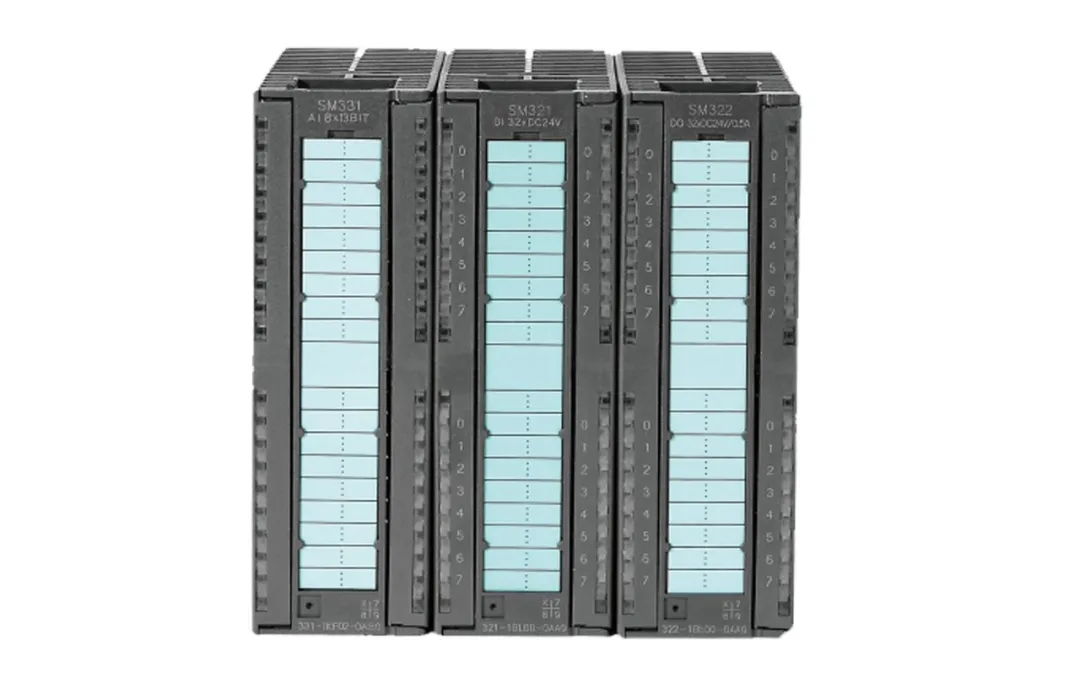
01: TRT Blast Furnace Gas Power Generation Control System
The TR blast furnace gas top pressure turbine power generation unit (TRT) utilizes the by-products of blast furnace smelting. The pressure energy and thermal energy of the blast furnace top gas are used to convert the gas into mechanical energy by passing it through a turbine expander, and then into electrical energy.
The TRT unit consists of eight major systems: a turbine main unit, a large valve system, a lubrication system, a hydraulic servo system, a drainage system, a nitrogen sealing system, a high/low voltage power distribution system, and an automatic control system. A redundant 400H CPU serves as the control system, connected to a Huceen H7-300 series module via a 153-1 interface module and a hot-swappable rail. Two industrial computers are connected to the CPU via 1613 network cards as the host computers.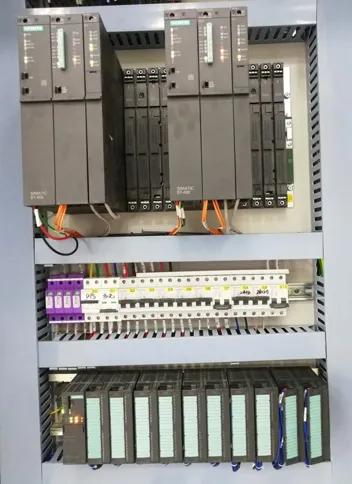
02: Converter steelmaking control system
Converter steelmaking uses molten iron, scrap steel, and ferroalloys as main raw materials. Without external energy sources, it relies on the physical heat of the molten iron itself and the chemical reactions between its components to generate heat, completing the steelmaking process in the converter. Converters are mainly used for the production of carbon steel, alloy steel, and the smelting of copper and nickel.
The system is controlled by a 400 CPU, connected to Huceen H7-300 series modules via a 153-1 interface module. The system consists of the converter body, main exhaust fan room, charging system, water pump room system, dust removal system, and vaporization cooling system.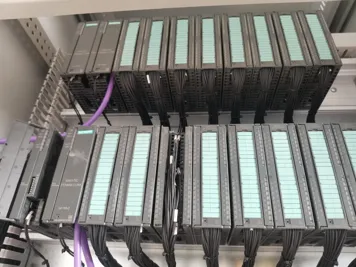
03: Continuous casting control system
The automated control of continuous casting mainly consists of control technologies such as the speed control of the casting machine's billet rollers, the vibration frequency control of the crystallizer, and the fixed-length cutting control.
This system uses six 300CPUs as the control system, connected to Huceen H7-300 series modules. The system is divided into a water distribution system, a vibration system, a straightening system, a cutting system, a billet discharge system, and a large and medium ladle system.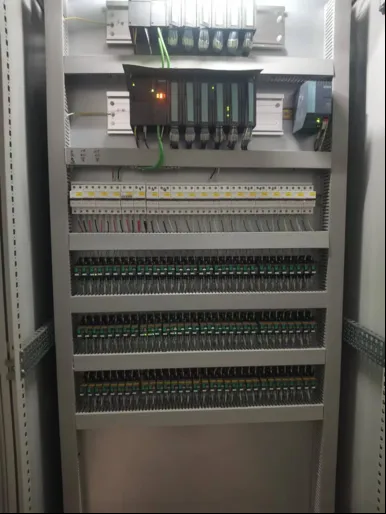
At the same time, the aging of existing systems, cost pressures, and supply chain risks are becoming increasingly prominent, plunging many enterprises into a dilemma of "difficult to upgrade, expensive to replace, and troublesome to maintain".
Huceen continues to improve this classic product
Based on a deep understanding of the S7-300 system and over a decade of technological accumulation, Huceen offers a reliable and smooth solution for businesses facing system upgrades, providing superior cost-effectiveness, stronger environmental adaptability, and more comprehensive after-sales support.
Advantages
Ultimate compatibility, seamless replacement
The external dimensions, module installation method and wiring rules are completely consistent with the S7-300, and there is no need to modify the cabinet or rewire.
Supports STEP7 and TIA Portal platforms; existing programs can be directly ported.
Supports the mixed use of S7-300 and Huceen H7-300 modules in the same system.
Superior performance
Its anti-interference capability, isolation capability, and electrical performance all meet the S7-300 standard, ensuring control accuracy and stability.
It provides comprehensive diagnostic functions for power failure, short circuit, and open circuit, significantly improving fault location efficiency.
Three-proof reinforcement
Addressing the challenges of high temperatures, dust, and corrosion in metallurgical and chemical industries, the entire H7-300 product line employs a three-proof process, providing: Moisture resistance( adaptable to environments with humidity levels below 95%); Corrosion resistance(resistant to hydrogen sulfide and chloride ion corrosion); Oil resistance(the surface coating resists oil adhesion, ensuring long-term stable operation)
Case Study
01: TRT Blast Furnace Gas Power Generation Control System
The TR blast furnace gas top pressure turbine power generation unit (TRT) utilizes the by-products of blast furnace smelting. The pressure energy and thermal energy of the blast furnace top gas are used to convert the gas into mechanical energy by passing it through a turbine expander, and then into electrical energy.
The TRT unit consists of eight major systems: a turbine main unit, a large valve system, a lubrication system, a hydraulic servo system, a drainage system, a nitrogen sealing system, a high/low voltage power distribution system, and an automatic control system. A redundant 400H CPU serves as the control system, connected to a Huceen H7-300 series module via a 153-1 interface module and a hot-swappable rail. Two industrial computers are connected to the CPU via 1613 network cards as the host computers.
02: Converter steelmaking control system
Converter steelmaking uses molten iron, scrap steel, and ferroalloys as main raw materials. Without external energy sources, it relies on the physical heat of the molten iron itself and the chemical reactions between its components to generate heat, completing the steelmaking process in the converter. Converters are mainly used for the production of carbon steel, alloy steel, and the smelting of copper and nickel.
The system is controlled by a 400 CPU, connected to Huceen H7-300 series modules via a 153-1 interface module. The system consists of the converter body, main exhaust fan room, charging system, water pump room system, dust removal system, and vaporization cooling system.
03: Continuous casting control system
The automated control of continuous casting mainly consists of control technologies such as the speed control of the casting machine's billet rollers, the vibration frequency control of the crystallizer, and the fixed-length cutting control.
This system uses six 300CPUs as the control system, connected to Huceen H7-300 series modules. The system is divided into a water distribution system, a vibration system, a straightening system, a cutting system, a billet discharge system, and a large and medium ladle system.
 Application of Huceen E7-200 SMART in Heat Treatment Industrial Furnace